> الملخص السريع: أنظمة ERP تركز على إدارة العمليات الداخلية والموارد، بينما CRM يركز على إدارة علاقات العملاء والمبيعات. الاختيار يعتمد على احتياجات شركتك وأولوياتها.
مقدمة: الفرق بين ERP و CRM
يواجه أصحاب الأعمال اليوم تحدياً كبيراً في اختيار النظام المناسب لإدارة عمليات شركاتهم. أنظمة ERP تركز على إدارة العمليات الداخلية والموارد، بينما CRM يهتم بإدارة علاقات العملاء والمبيعات. هذا القرار الاستراتيجي يؤثر مباشرة على كفاءة العمليات ونمو الأعمال.
وفقاً لدراسة جارتنر 2026، تستثمر الشركات العالمية أكثر من 41 مليار دولار سنوياً في أنظمة ERP، و 48 مليار دولار في حلول CRM. هذه الأرقام تعكس الأهمية الحيوية لكلا النظامين في عالم الأعمال الحديث.
ما هو نظام ERP؟ التعريف والمزايا
تعريف نظام ERP
نظام تخطيط موارد المؤسسة (Enterprise Resource Planning) هو منصة برمجية شاملة تدمج جميع العمليات التجارية الأساسية. يربط ERP بين الأقسام المختلفة مثل المحاسبة والمخزون والموارد البشرية والإنتاج.
المزايا الرئيسية لأنظمة ERP
- توحيد البيانات: قاعدة بيانات مركزية واحدة لجميع الأقسام
- تحسين الكفاءة: أتمتة العمليات الروتينية وتقليل الأخطاء البشرية
- التقارير الشاملة: رؤى عميقة حول أداء الشركة في الوقت الفعلي
- التحكم في التكاليف: مراقبة دقيقة للمصروفات والميزانيات
- الامتثال التنظيمي: ضمان الالتزام بالمعايير واللوائح
الوحدات الأساسية في ERP
ما هو نظام CRM؟ الوظائف والفوائد
تعريف نظام CRM
نظام إدارة علاقات العملاء (Customer Relationship Management) هو تقنية لإدارة جميع تفاعلات الشركة مع العملاء الحاليين والمحتملين. يهدف CRM إلى تحسين العلاقات التجارية وزيادة المبيعات.
الفوائد الأساسية لأنظمة CRM
- تحسين خدمة العملاء: استجابة أسرع وأكثر دقة لاستفسارات العملاء
- زيادة المبيعات: تتبع الفرص والصفقات بكفاءة عالية
- الاحتفاظ بالعملاء: استراتيجيات مخصصة لكل عميل
- التسويق المستهدف: حملات تسويقية مبنية على بيانات دقيقة
- التعاون الفعال: تنسيق أفضل بين فرق المبيعات والتسويق
المكونات الرئيسية لـ CRM
الفروقات الجوهرية بين ERP و CRM
النطاق والتركيز
| المعيار | ERP | CRM |
|---------|-----|-----|
| التركيز | العمليات الداخلية | العلاقات الخارجية |
| النطاق | الشركة كاملة | المبيعات والتسويق |
| المستخدمون | جميع الأقسام | فرق المبيعات والتسويق |
| البيانات | مالية وتشغيلية | عملاء ومبيعات |
أهداف كل نظام
أهداف ERP:
- تحسين الكفاءة التشغيلية
- تقليل التكاليف
- توحيد العمليات
- تحسين الامتثال
أهداف CRM:
- زيادة المبيعات
- تحسين رضا العملاء
- تعزيز الولاء
- تحسين التسويق
متى تحتاج شركتك لنظام ERP؟
المؤشرات التي تستدعي تطبيق ERP
أنواع الشركات التي تستفيد من ERP
- الشركات الصناعية: لإدارة الإنتاج والمخزون
- شركات التوزيع: لتتبع سلسلة التوريد
- الشركات الخدمية الكبيرة: لإدارة الموارد والعمليات
- المؤسسات التجارية: لتوحيد العمليات المالية والتشغيلية
فوائد ERP للشركات المتنامية
تشير دراسات إلى أن الشركات التي تطبق أنظمة ERP تحقق:
- تحسين الإنتاجية بنسبة 25-30%
- تقليل التكاليف التشغيلية بـ 15-20%
- تحسين دقة البيانات بنسبة 95%
- تسريع العمليات بـ 40%
متى تحتاج شركتك لنظام CRM؟
العلامات التي تدل على الحاجة لـ CRM
الشركات التي تحتاج CRM أولاً
- الشركات الناشئة: التي تركز على النمو السريع
- شركات الخدمات: التي تعتمد على العلاقات
- الشركات التجارية: التي تدير عدد كبير من العملاء
- الوكالات: التي تحتاج لتتبع العملاء والمشاريع
إحصائيات هامة حول CRM
- الشركات التي تستخدم CRM تزيد مبيعاتها بمعدل 29%
- تحسين الاحتفاظ بالعملاء بنسبة 27%
- زيادة الإنتاجية في المبيعات بـ 34%
- تحسين التوقعات بدقة تصل لـ 42%
معايير اتخاذ القرار: ERP أم CRM؟
تحليل احتياجات الشركة
#### 1. حجم الشركة ونضجها
الشركات الصغيرة (أقل من 50 موظف):
- ابدأ بـ CRM إذا كان التركيز على النمو والمبيعات
- فكر في ERP عند وجود عمليات معقدة
الشركات المتوسطة (50-250 موظف):
- قيم أولوياتك: هل المشكلة في العمليات الداخلية أم العلاقات الخارجية؟
- يمكن البدء بأحدهما ثم إضافة الآخر
الشركات الكبيرة (أكثر من 250 موظف):
- غالباً ما تحتاج كلا النظامين
- ابدأ بالنظام الأكثر إلحاحاً
#### 2. طبيعة الصناعة
الصناعات التي تحتاج ERP أولاً:
- الصناعات التحويلية
- التجارة والتوزيع
- الخدمات المالية
- الرعاية الصحية
الصناعات التي تحتاج CRM أولاً:
- الخدمات الاستشارية
- العقارات
- التأمين
- التكنولوجيا والبرمجيات
الميزانية والموارد المتاحة
#### تكلفة التطبيق
تكاليف ERP:
- الحلول المحلية: 20,000 - 500,000 دولار
- الحلول السحابية: 100 - 500 دولار شهرياً لكل مستخدم
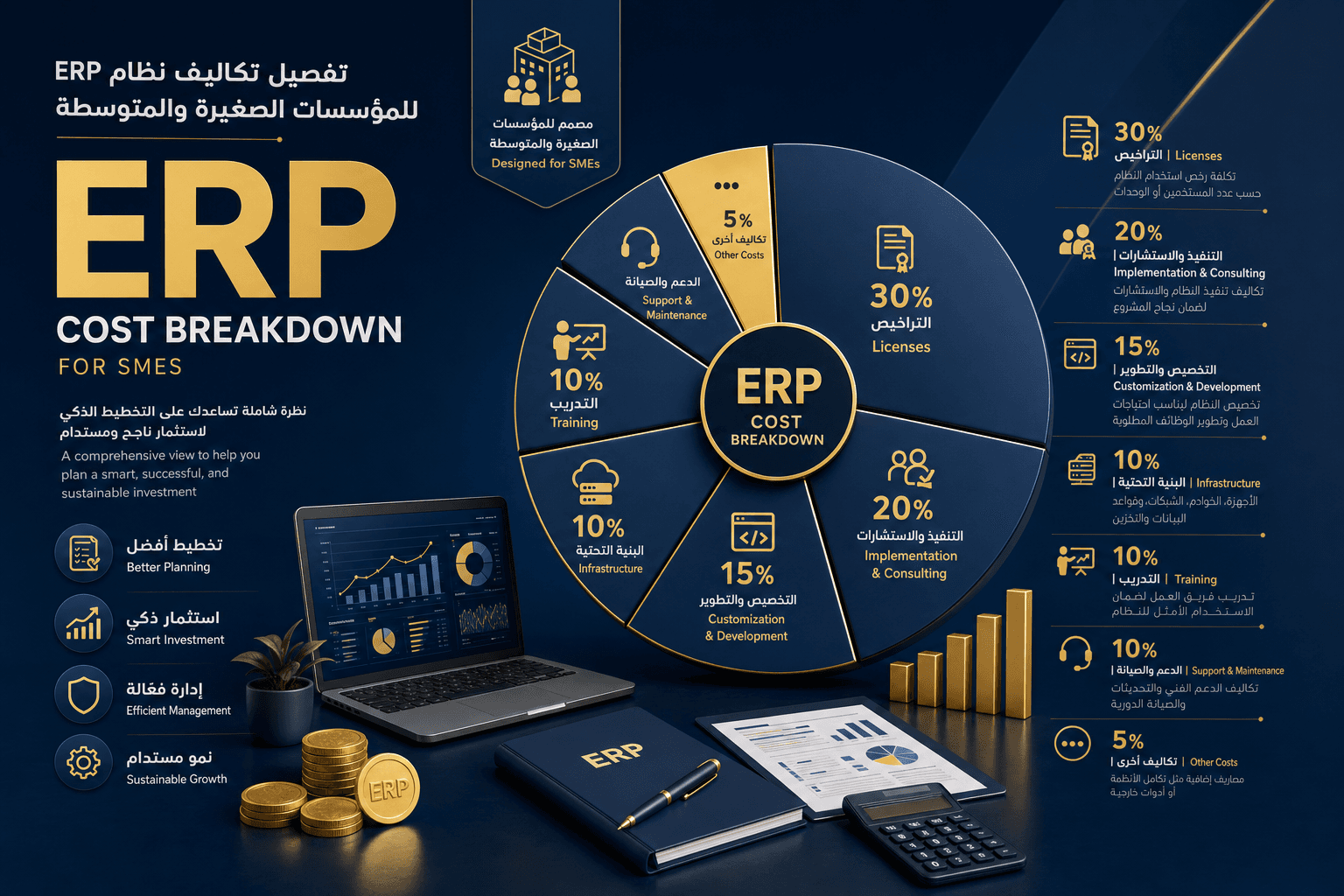
- التخصيص والتدريب: 30-50% من تكلفة الترخيص
تكاليف CRM:
- الحلول السحابية: 25 - 150 دولار شهرياً لكل مستخدم
- الحلول المخصصة: 10,000 - 100,000 دولار
- التدريب والتطبيق: 20-30% من التكلفة الإجمالية
#### العائد على الاستثمار المتوقع
ROI لأنظمة ERP:
- متوسط فترة الاسترداد: 12-24 شهر
- العائد السنوي: 15-25% من التكلفة
- الوفورات الرئيسية: تقليل التكاليف التشغيلية
ROI لأنظمة CRM:
- متوسط فترة الاسترداد: 6-18 شهر
- العائد السنوي: 20-40% من التكلفة
- الإيرادات الإضافية: زيادة المبيعات والاحتفاظ بالعملاء
التكامل بين ERP و CRM
فوائد الدمج بين النظامين
عندما تنضج الشركة وتنمو، تصبح الحاجة لكلا النظامين ضرورية. التكامل بين ERP و CRM يخلق نظاماً بيئياً متكاملاً يحسن الأداء العام.
#### المزايا الأساسية للتكامل:
أفضل الممارسات للتكامل
#### 1. التخطيط المرحلي
- المرحلة الأولى: تطبيق النظام الأكثر إلحاحاً
- المرحلة الثانية: إضافة النظام الثاني مع ضمان التكامل
- المرحلة الثالثة: تحسين وتطوير العمليات المتكاملة
#### 2. اختيار التقنيات المتوافقة
- البحث عن حلول من نفس المزود
- التأكد من وجود واجهات برمجة تطبيقات (APIs)
- الاستعانة بخبراء التكامل المتخصصين
دراسات حالة: نجاحات حقيقية
حالة نجاح ERP: شركة تصنيع سعودية
التحدي: شركة تصنيع متوسطة في الرياض تواجه صعوبات في:
- تتبع المخزون بدقة
- التحكم في التكاليف
- إعداد التقارير المالية
الحل: تطبيق نظام ERP مخصص من إتقان للحلول المتكاملة
النتائج بعد 12 شهر:
- تقليل أخطاء المخزون بنسبة 85%
- تحسين هوامش الربح بـ 18%
- تسريع إعداد التقارير من أسبوع إلى ساعة واحدة
حالة نجاح CRM: شركة خدمات مصرية
التحدي: شركة استشارات في القاهرة تعاني من:
- فقدان فرص المبيعات
- عدم متابعة العملاء بفعالية
- ضعف التنسيق بين الفرق
الحل: تطبيق نظام CRM متكامل
النتائج بعد 8 أشهر:
- زيادة معدل تحويل العملاء المحتملين بـ 45%
- تحسين رضا العملاء بنسبة 60%
- زيادة الإيرادات بـ 32%
نصائح للاختيار الصحيح
خطوات التقييم الشامل
#### 1. تحليل العمليات الحالية
- حدد نقاط الألم: ما هي المشاكل الأكثر إلحاحاً؟
- قيس التكاليف الخفية: كم تكلف المشاكل الحالية؟
- حدد الأولويات: ما هو الأهم لنمو الشركة؟
#### 2. استشارة الفرق المختلفة
- فريق المبيعات: هل يحتاجون لتتبع أفضل للعملاء؟
- فريق المحاسبة: هل يواجهون صعوبات في التقارير؟
- فريق الإدارة: ما هي الرؤية الاستراتيجية؟
#### 3. تقييم الموردين
- الخبرة في السوق المحلي: فهم البيئة التجارية
- الدعم الفني: توفر الدعم باللغة العربية
- المرونة في التخصيص: قابلية التكيف مع احتياجاتك
- التكلفة الإجمالية: تشمل التطبيق والتدريب والصيانة
أخطاء شائعة يجب تجنبها
التوجهات المستقبلية
الذكاء الاصطناعي في ERP و CRM
في أنظمة ERP:
- التنبؤ بالطلب: خوارزميات ذكية لتوقع الاحتياجات
- الصيانة التنبؤية: تجنب الأعطال قبل حدوثها
- الأتمتة الذكية: معالجة المعاملات بذكاء اصطناعي
في أنظمة CRM:
- تحليل سلوك العملاء: فهم أعمق لتفضيلات العملاء
- التسعير الديناميكي: أسعار مخصصة لكل عميل
- المحتوى المخصص: رسائل تسويقية ذكية
الحوسبة السحابية والنمو
مع نمو السوق السعودي والمصري، تتجه الشركات نحو:
- الحلول السحابية: مرونة وتوفير في التكاليف
- النماذج المختلطة: دمج الحلول المحلية والسحابية
- التطبيقات المحمولة: إدارة الأعمال من أي مكان
خلاصة واستنتاجات
القرار الاستراتيجي الصحيح
اختر ERP عندما:
- تواجه مشاكل في العمليات الداخلية
- تحتاج لتحسين الكفاءة والتحكم في التكاليف
- لديك عمليات معقدة تحتاج لتوحيد
- الامتثال والمطابقة أولوية قصوى
اختر CRM عندما:
- تركز على النمو وزيادة المبيعات
- تحتاج لتحسين العلاقة مع العملاء
- فرق المبيعات والتسويق تحتاج لتنسيق أفضل
- البيانات التسويقية مبعثرة وغير مستغلة
اختر كليهما عندما:
- شركتك كبيرة ومعقدة
- تحتاج رؤية شاملة للعمليات والعملاء
- الميزانية تسمح بالتكامل المتقدم
- النمو السريع يتطلب حلول شاملة
التوصيات النهائية
إن الاختيار بين ERP و CRM ليس مجرد قرار تقني، بل قرار استراتيجي يشكل مستقبل شركتك. مع إتقان للحلول المتكاملة، يمكنك الاعتماد على خبرة محلية عميقة وحلول مخصصة تناسب السوق العربي تماماً.
هل تريد اتخاذ القرار الصحيح لشركتك؟ [احجز استشارة مجانية مع خبراء إتقان](https://etqan.com/consultation) واكتشف النظام الأمثل لاحتياجاتك الفريدة. فريقنا المتخصص سيحلل وضعك الحالي ويقدم توصيات مخصصة تضمن النجاح والنمو المستدام.
الأسئلة الشائعة
ما هو الفرق الأساسي بين ERP و CRM؟
ERP يركز على إدارة العمليات الداخلية والموارد، بينما CRM يختص بإدارة علاقات العملاء والمبيعات. ERP للعمليات الداخلية و CRM للعلاقات الخارجية.
أيهما أرخص في التطبيق ERP أم CRM؟
عموماً CRM أقل تكلفة من ERP. تتراوح تكلفة CRM من 25-150 دولار شهرياً لكل مستخدم، بينما ERP يتراوح من 100-500 دولار شهرياً لكل مستخدم.
هل يمكن تطبيق ERP و CRM معاً؟
نعم، بل ينصح بذلك للشركات الكبيرة. التكامل بين النظامين يوفر رؤية شاملة للعمليات والعملاء ويحسن الأداء العام للشركة بشكل كبير.
كم يستغرق تطبيق نظام ERP أو CRM؟
تطبيق CRM يستغرق عادة 2-6 أشهر، بينما ERP قد يستغرق 6-18 شهر. المدة تعتمد على حجم الشركة ومدى التخصيص المطلوب.
ما هو العائد المتوقع من الاستثمار في هذه الأنظمة؟
CRM يحقق عائد 20-40% سنوياً مع فترة استرداد 6-18 شهر، بينما ERP يحقق عائد 15-25% سنوياً مع فترة استرداد 12-24 شهر.